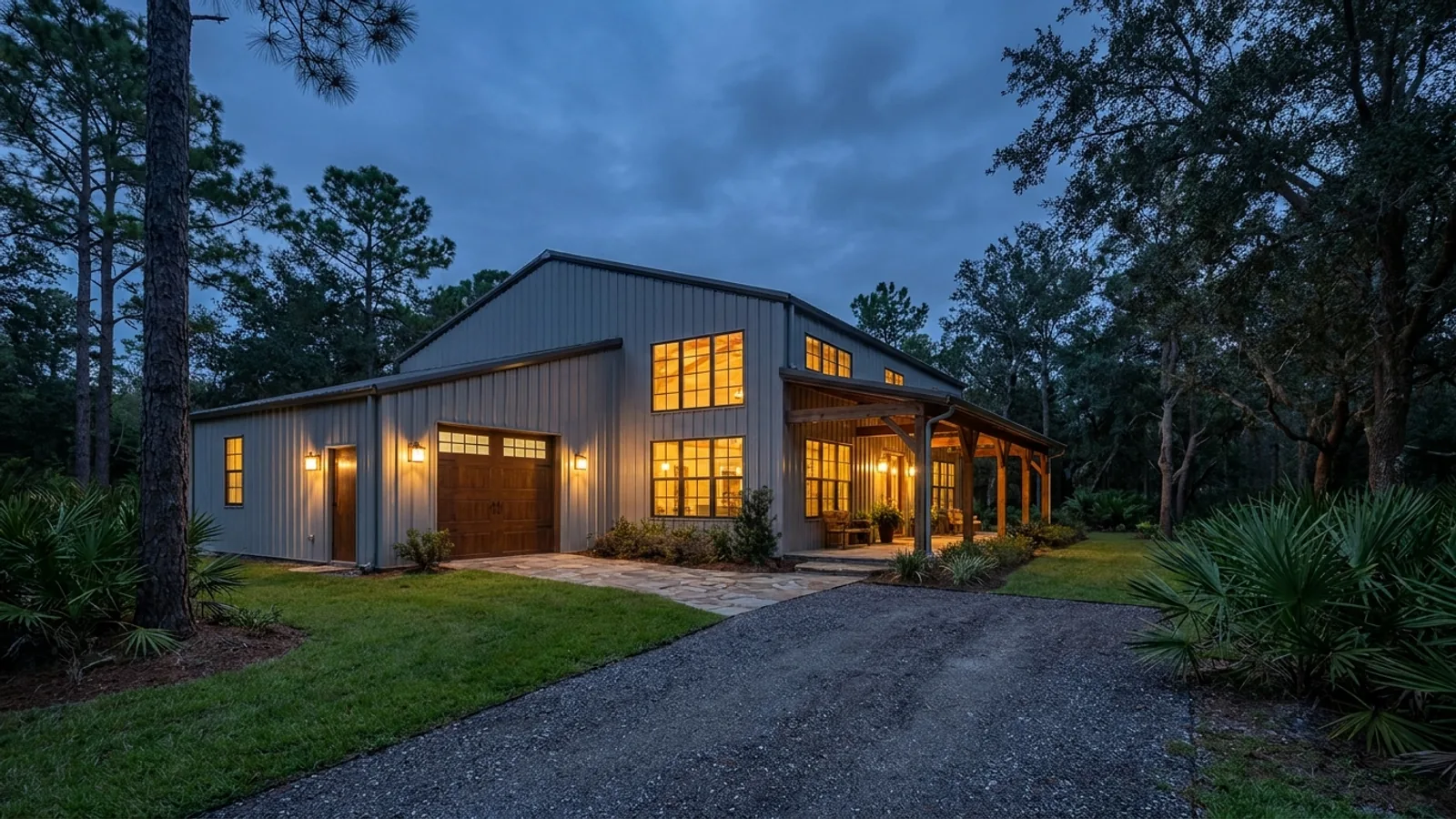
Barndominium Builders in Miami, FL
Miami-Dade is one of only two counties in Florida inside the High Velocity Hurricane Zone, and it carries the strictest wind standard in the state: 175 mph, five points above neighboring Broward's 170. The county also runs its own Notice of Acceptance system for building products, layered on top of the statewide approval framework, and in practice a large share of national manufacturers' Florida Product Approvals are stamped 'not for use in HVHZ' — which means the Miami-Dade NOA ends up being the document that actually gets a steel building through plan review here. The land for a project like this sits almost entirely in the Redland, the AU-zoned agricultural belt south and west of the Urban Development Boundary around Homestead and Florida City, where a genuine nursery and tropical-fruit economy still works farm-scale acreage. It is also where the ground itself becomes a design question: the Redland sits on shallow oolitic limestone with inches of soil on top of rock, so foundations here are an exercise in cutting into stone, not digging through sand.
Miami at a glance
- County
- Miami-Dade County
- Population
- 2,768,954
- Also serving in Miami-Dade County
- Miami Gardens
Building conditions in Miami
What actually changes from one Florida city to the next: who issues the permit, what wind speed the structure has to be engineered to, and what the ground is like. These are the numbers your drawings have to satisfy.
F.S. 553.842(8)(a) and Florida Administrative Code 61G20-3.008(1)(a) both name Miami-Dade's own Product Control Division as one of the state's recognized approval-evaluation entities, not a rival system. Florida Building Commission training material (Mark Zehnal, FRSA, 'Advanced Navigating into Miami-Dade NOA's and Florida Product Approvals') states it directly: 'NOA no restrictions, FPA not for use in HVHZ.' Verify any specific product against Miami-Dade's own Product Control Search before ordering.
Florida Building Code 8th Edition (2023) § 1620.2, Risk Category II, confirmed against a Miami-Dade County permit-system attachment citing the same ASCE 7-22 figure. 175 mph is Miami-Dade; 170 mph is Broward. The two are constantly conflated in marketing copy for both counties.
FBC 8th Edition (2023), Section 202 definitions; §§ 2223.8.4, 2223.8.5, 2222.4.3, 2223.5 and 1620.3. Identical mechanics to Broward; the HVHZ regime does not vary between the two counties.
Miami-Dade Code of Ordinances Ch. 33 §§ 33-49 (lot standards), 33-282 (setbacks) and 33-283 (height), cross-checked against the county's own official AU-Agricultural district summary page. We confirm current lot, setback and height figures against Miami-Dade's Code of Ordinances before finalizing a site plan.
Implementing Order No. 4-63, ordered 16 June 2026, effective 26 June 2026, superseding the prior June 2025 schedule. Confirm jurisdiction against the county GIS parcel lookup before assuming a Redland address is unincorporated.
USDA NRCS Official Series Description, Krome series (type location: Miami-Dade County); UF/IFAS SL183/TR004, 'Calcareous Soils in Miami-Dade County.'
Also worth knowing before you build in Miami
- The whole county is in the wind-borne debris region
- Miami-Dade's 175 mph countywide design speed clears the 140 mph statewide trigger by a wide margin, so impact protection is required on every glazed opening at every address, same as Broward. Approved shutters remain a full alternative to impact glass under the code.
- Impact fees, Redland estimate
- Roughly $7,600 all-in on a single-family home in unincorporated South Dade before the per-square-foot school component: mobility (Zone 4, likely applicable) $3,876, fire $527.55, police $688.42, school $612 flat plus $0.918 per sq ft, and Parks District 3 (South) $1,910.87.
- Building permit fee schedule
- New single-family construction runs $0.60 per sq ft up front (credited toward the final fee) plus $0.96 per sq ft, with a $147 minimum on any residential permit. Using a private provider for both plan review and inspection cuts 30% off the base residential fee; inspection alone cuts 15%.
- Owner-builders get a slower, no-extra-fee track
- Since the 2025/2026 amendment cycle, residential owner-builders on detached single-family new construction can choose a 20-business-day review at no fee increase, or pay more for a 5-business-day expedited review. An owner acting as their own contractor should expect the longer clock as the default.
- Rainfall
- 61.90 inches a year, mean annual temperature 77.2°F. Miami's precipitation normal rose more than 5 inches between the 1981-2010 and 1991-2020 climate normals, the only one of the four main South Florida climate sites to increase over that period.
- Hurricane Andrew, reanalyzed
- Andrew came ashore in south Miami-Dade, the Redland itself, on 24 August 1992. The official 2004 reanalysis upgraded it to Category 5, with landfall sustained winds of roughly 167 mph, still short of the 175 mph design standard the county now requires.
- Flood insurance discount, unincorporated county
- Unincorporated Miami-Dade holds a Community Rating System Class 3, worth a 35% National Flood Insurance Program premium discount, effective April 2024. FEMA upgraded the county two full class levels in a single cycle, described in the county's own release as a first.
- Single-family permits are growing here, not shrinking
- 2,666 single-family permits authorized in Miami-Dade County in 2025, up 55.9% year over year, a sharply different trend than Broward's declining single-family share over the same period.
- The Redland is a working agricultural economy, not a hobby-farm story
- Miami-Dade agriculture generated an estimated $1.08 billion in total economic impact on roughly 85,000 acres and 1,576 farms, nursery/greenhouse production the largest subsector. That study is dated to the 1997-98 season, the most recent full economic-impact study of its kind.
- Septic is the norm, and it is a separate fee line
- The Redland runs predominantly on septic rather than county sewer, and septic permitting is billed on a separate environmental fee schedule from the structural building permit, roughly $70 to $150 and up depending on the system.
- Permit review deadlines apply the same as everywhere else
- The HVHZ does not buy the building department extra time. The statewide 30-business-day clock and 10% per-day-late fee cut apply in Miami-Dade exactly as they do inland, and the private-provider route under F.S. 553.791 is available here too.
FBC § 1609.2 / § 1609.1.2. No distance-to-coast test needed; the wind speed alone puts the whole county in.
miamidade.gov current impact-fee-rates.pdf, effective through Dec 2027 (Mobility) and Dec 2027 (School). This is an estimate, not a quote: we confirm the applicable Mobility Context Zone for a specific Redland parcel before finalizing a quote, and the four zones swing the mobility figure by roughly $500. Do not use the older 2015/2016-vintage schedule that still circulates on third-party sites; it is materially higher and superseded.
Implementing Order No. 4-63 (effective 26 June 2026). Miami-Dade publishes its own private-provider discount rather than leaving it to F.S. 553.791's jurisdiction-by-jurisdiction default.
Miami-Dade Board of County Commissioners resolution, June 2025 cycle, folded into IO 4-63.
NOAA NCEI 1991-2020 Climate Normals, station USW00012839, Miami International Airport.
Landsea, C.W. et al., 'A Reanalysis of Hurricane Andrew's Intensity,' Bulletin of the American Meteorological Society, November 2004 (NOAA/AOML & NHC). Several instrument stations failed before the true peak arrived, so even the reanalyzed figure is a reconstruction, not a direct top-end reading.
Miami-Dade County official press release, January 2024 (miamidade.gov). This class covers unincorporated county, where the Redland sits.
U.S. Census Bureau Building Permits Survey, as reported by MIAMI REALTORS® (August 2026 release).
UF/IFAS EDIS FE308, Degner, Stevens, Mulkey & Hodges, published September 2001, covering the 1997-98 growing season.
Miami-Dade 'schedule-environmental.pdf,' distinct from the structural Implementing Order 4-63 fee schedule.
F.S. 553.792, as amended by HB 267 (2024), effective 1 January 2025; F.S. 553.791.
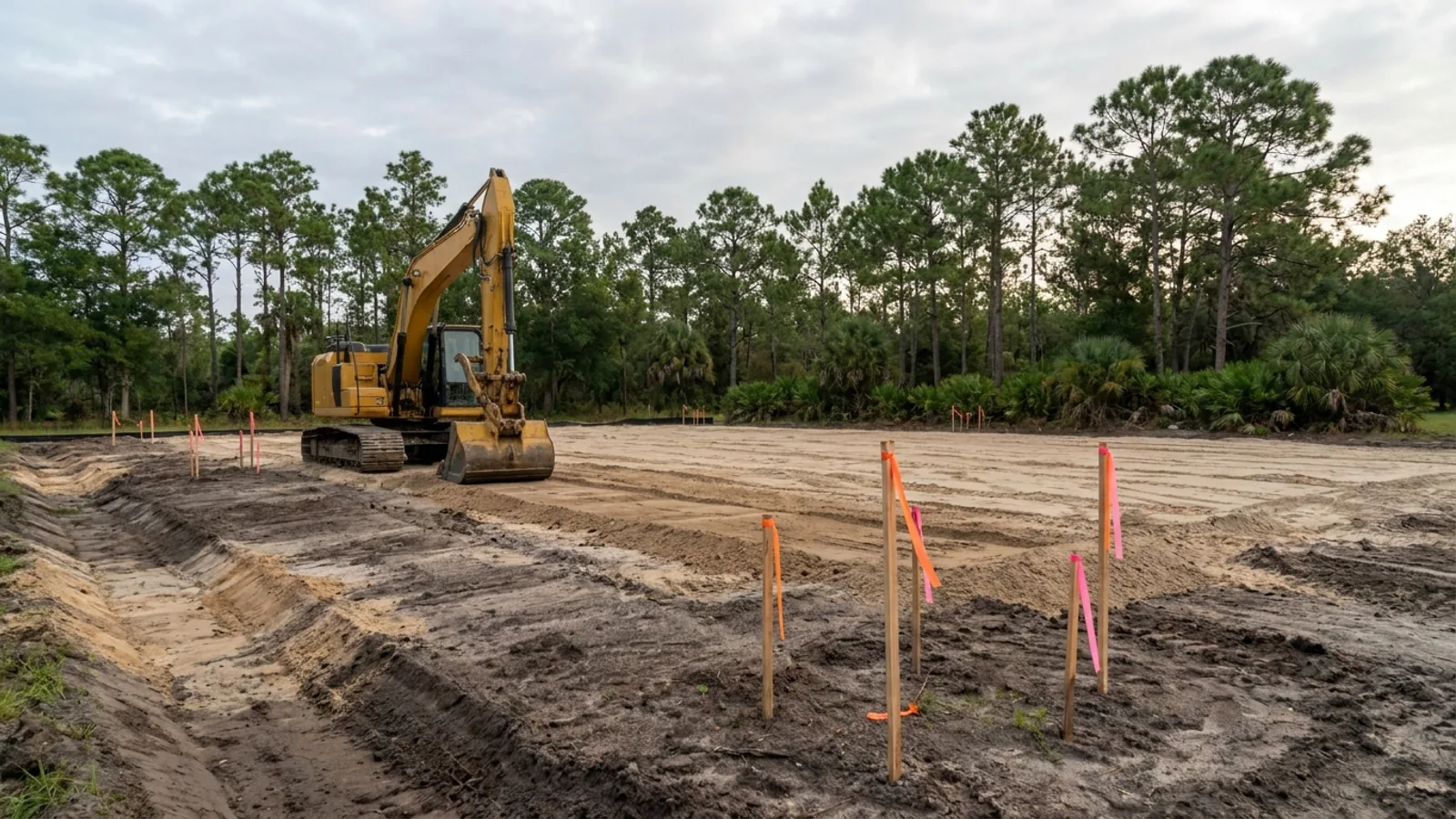
The expensive surprises are in the ground, not the building
Most of Miami-Dade County rates poorly for dwellings in the soil survey, and the reason is water sitting close to the surface rather than weak ground. That makes the pad elevation and the drainage plan the two line items most likely to move your budget. We price the dirt before we price the building.
What we build in Miami
Every service we offer is available across Miami-Dade County, from a shell kit you erect yourself to a finished home we hand you the keys to. What a build costs depends far more on the parcel than on square footage, so we price against your land rather than publishing a rate card.
See all nine servicesWhat a build looks like
Three stages every Miami project passes through, from a raw parcel to a finished home. Site work first, because that is where the budget is decided.
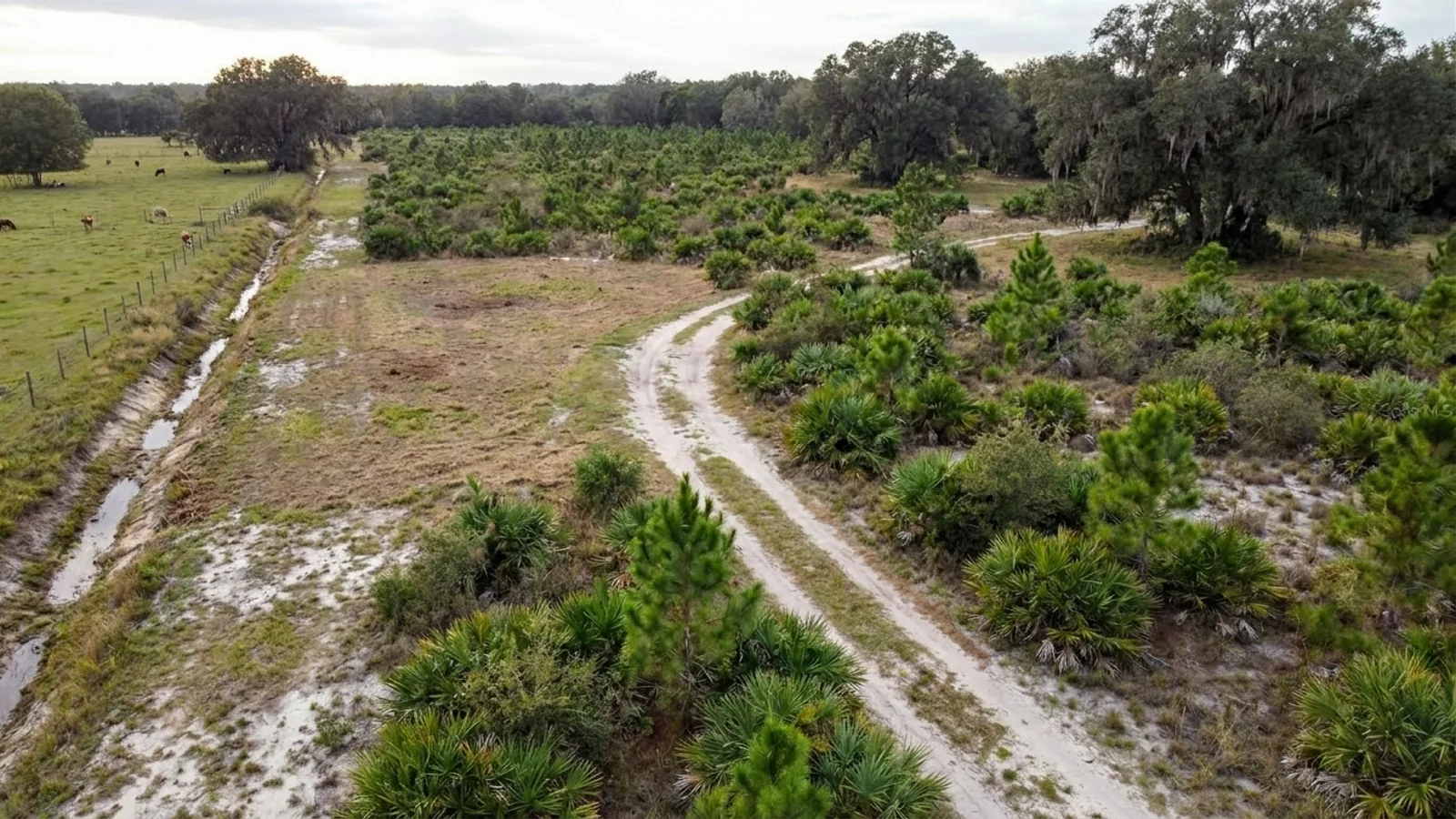
The parcel
Zoning, setbacks, flood zone and utility access get checked before anything is drawn.
Pad and permit
Clearing, grading and a compacted pad, while the submittal works through Miami-Dade County.
Frame to finish
Shell erected and dried in, then systems, insulation and interior finish through to CO.
Those are the rules for Miami-Dade County. Tell us what you want to build and we will draw it to them.
Where we build around Miami
Miami-Dade County and the rural land around it. The buildable acreage for a project this size usually sits outside the city limits, which is frequently what changes who issues your permit.
Keep reading
The questions that usually come next once you know what Miami allows.
Is It Legal in Florida?
Classification, zoning, and what the High Velocity Hurricane Zone actually requires in Miami-Dade County.
Read itBarndominium Cost Guide
Sourced ranges by tier, plus the Florida adders that land on top of a national average.
Read itHow Long Does It Take?
Census build-duration data, and the Florida statute capping permit review at 30 business days.
Read itSources for this page
The primary documents behind the Miami figures above. We would rather you checked them than took our word for it.
- Miami-Dade County Code of OrdinancesZoning districts, minimum lot sizes, setbacks and height limits, as adopted.library.municode.com
- Miami-Dade County Building DepartmentThe authority that reviews and issues the permit for unincorporated parcels.miamidade.gov
- Florida Statute 553.792The 30-business-day permit review clock, and the 10% fee reduction per day a jurisdiction runs late.flsenate.gov
- Florida Building CodeThe adopted code itself, including the wind-speed figures and the High Velocity Hurricane Zone definition.floridabuilding.org
- ASCE 7 Hazard ToolLook up the ultimate design wind speed at a specific address rather than reading it off a contour map.asce7hazardtool.online
Nearby areas we build in
Close to Miami, though the permitting authority and wind requirements can differ once you cross a county line.
Building in Miami: common questions
10 questions we get asked most often about building in Miami. If yours is not on the list, ask it directly.
Do I need a Miami-Dade Notice of Acceptance, or is a statewide Florida Product Approval enough?
What wind speed does my building actually have to be engineered to?
Can I actually build a barndominium in Miami-Dade, and where?
What's the ground actually like out in the Redland?
Will a kit I found online work here?
How much are impact fees and permit fees actually going to add?
How long will the permit take?
Does Miami-Dade's flood insurance discount matter for a Redland property?
Why does a market this urbanized even have room for barndominiums?
Is the Redland on septic, and does that add cost?
Building in Miami?
Start with the plan. Tell us what you want to build and we will draw it, then confirm what Miami-Dade County will actually let you put on the parcel and what wind load it has to meet. That conversation costs nothing.