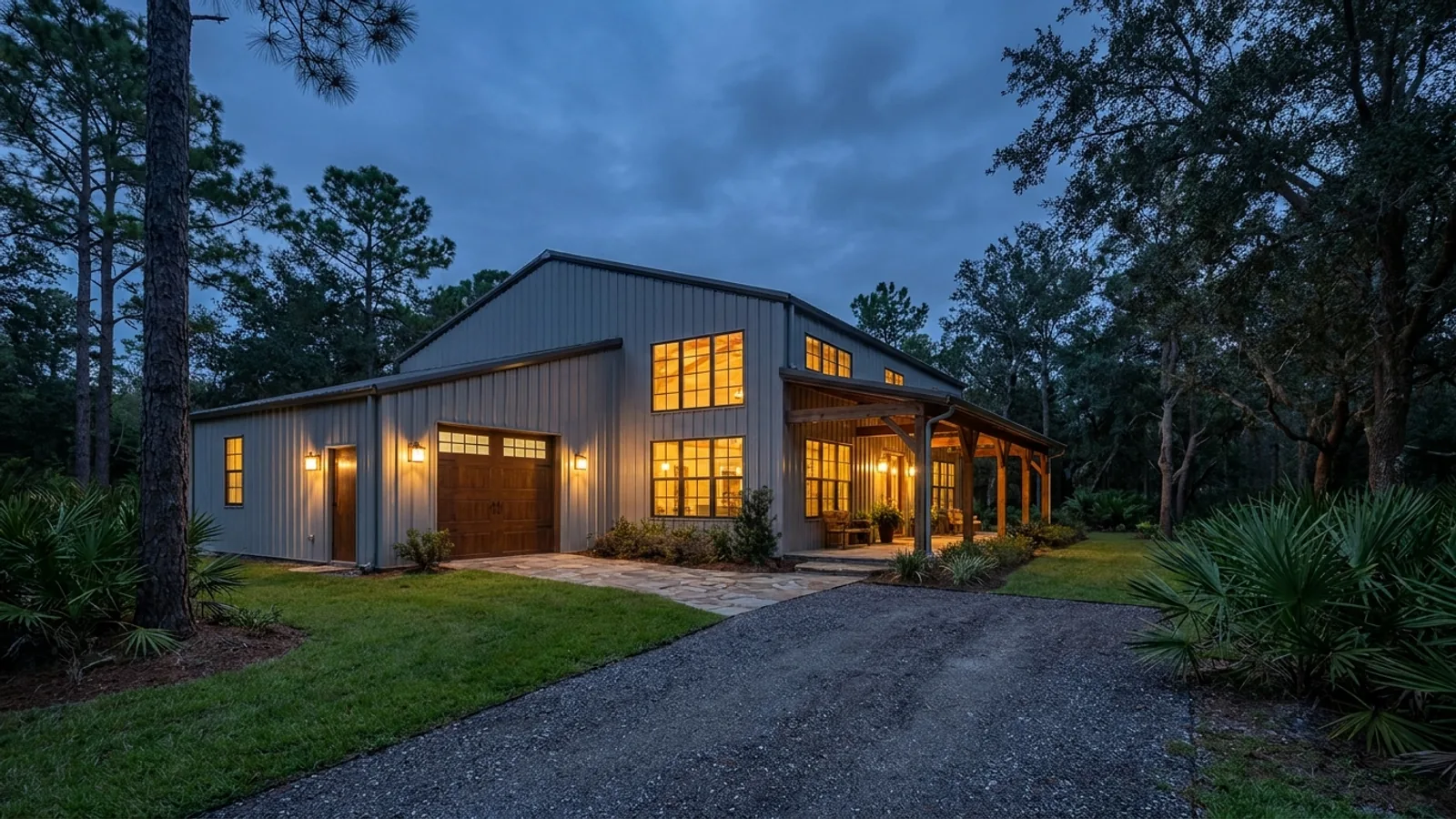
Barndominium Builders in Miami Gardens, FL
Miami Gardens' own zoning code settles the acreage question before it's even asked: the city's five residential districts run R-1 through R-50, there is no agricultural or estate district anywhere in the roster, and R-1, the largest single-family lot the city has, tops out at a 7,500 sq ft minimum, well under a fifth of an acre. The realistic Miami Gardens project is a compact, steel-framed shouse or shop-house on a standard city lot, not a rural build, the same honest framing we give clients in Hollywood and Pembroke Pines. What's genuinely new here: the City Council voted 6-0 on April 23, 2026 to legalize accessory dwelling units, a real option worth building into a site plan for anyone adding space for family or rental income. And because Miami Gardens sits inside Miami-Dade County, every build here still answers to the county's 175 mph design wind speed and full High Velocity Hurricane Zone engineering requirements, regardless of the city's own more modest zoning envelope.
Miami Gardens at a glance
- County
- Miami-Dade County
- Population
- 113,177
- Also serving in Miami-Dade County
- Miami
Building conditions in Miami Gardens
What actually changes from one Florida city to the next: who issues the permit, what wind speed the structure has to be engineered to, and what the ground is like. These are the numbers your drawings have to satisfy.
City of Miami Gardens Code of Ordinances § 34-342, Subpart B, Article XI ('Tables for development standards'), via the municipal code mirror at miamigardens.elaws.us, cross-referenced against Municode's chapter listing for Miami Gardens.
Miami Gardens City Council session, April 23, 2026 (citizenportal.ai meeting summary). We confirm the final adopted dimensional standards, minimum lot size, and setbacks against the codified ordinance text or the city's Planning & Zoning division before finalizing a design that relies on it.
Florida Building Code 8th Edition (2023) § 1620.2, Risk Category II, confirmed against a Miami-Dade County permit-system attachment citing the same ASCE 7-22 figure. Wind design speed and HVHZ status are set countywide, not by municipality.
FEMA Community Rating System eligible-communities documentation; the 120345 / 5-1-09 record is corroborated independently across two separately-dated FEMA CRS publications (October 2010 program manual appendix and April 2022 nationwide eligible-communities list).
City of Miami Gardens Development Services Department, Building Services Division fee schedule, revised 09/11/2024 (miamigardens-fl.gov/DocumentCenter/View/7722).
U.S. Census Bureau QuickFacts, Miami Gardens city, Florida, Vintage 2024 population estimates, released May 2025.
Also worth knowing before you build in Miami Gardens
- Who issues your permit
- City of Miami Gardens Development Services Department, Building Services Division, handles it, not Miami-Dade County. Miami Gardens is its own permitting authority, separate from the unincorporated county's building department. Submissions go to cmgonlinepermit@miamigardens-fl.gov, with an online portal for status checks, payments, and inspection scheduling.
- Certificate of Occupancy and zoning review add-ons
- A Certificate of Occupancy for a single-family residence runs $69.15 per unit, separate from the building permit fee itself. Zoning review for residential new construction is a sliding scale: $30 for up to 300 sq ft, $63 for 301-650 sq ft, and $0.10 per sq ft above that.
- Surcharges stack on top of the base permit fee
- A 15% city technology surcharge and a 2.5% state surcharge under F.S. 553.721 both apply on top of the calculated building permit fee. Budget for those alongside the base fee and the 30% up-front processing charge rather than being surprised by them at payment.
- Private-provider discount isn't a published fixed rate here
- Unlike unincorporated Miami-Dade's published 30%/15% residential discount for using a licensed private provider, Miami Gardens' fee schedule doesn't show a fixed percentage for the same route. The statewide entitlement under F.S. 553.791 still applies inside city limits; we confirm the actual discount amount directly with the Building Services Division rather than assume the county's number.
- What the HVHZ demands of a metal building
- Roof and wall sheets must run 24 gauge minimum, against the 26 and 29 gauge the national kit market builds to, and a Florida-licensed engineer has to seal the site-specific adaptation, foundation, and anchorage as one system. This applies to Miami Gardens exactly as it does to the rest of Miami-Dade, the HVHZ boundary is the county line, with no partial exemption for any city inside it.
- Exposure Category C, and impact protection on every opening
- There's no Exposure B anywhere in the HVHZ, however sheltered a lot feels, and Miami-Dade's 175 mph design speed clears the 140 mph wind-borne debris threshold by a wide margin, impact protection is mandatory at every opening, countywide, Miami Gardens included.
- Check which document actually carries the HVHZ rating
- Miami-Dade can't legally demand more than a valid HVHZ-rated statewide approval, but a large share of national manufacturers' Florida Product Approvals are issued with an explicit HVHZ exclusion. For many steel components, the Miami-Dade Notice of Acceptance ends up being the only document that actually carries an HVHZ rating, worth checking before ordering, on a Miami Gardens job exactly as on any other Miami-Dade address.
- Rainfall, from the closer station
- Opa-locka the closest station geographically, 61.05 inches a year and a 76.5°F average, measured at Miami-Opa-locka Executive Airport rather than the Miami International Airport figure used for the rest of the county.
- Founding and civic identity
- Miami Gardens incorporated on May 13, 2003 as Miami-Dade County's 33rd municipality, on what had been the unincorporated Carol City community, and became Florida's largest majority-Black city. Hard Rock Stadium, home to the Miami Dolphins and a 2026 FIFA World Cup venue, sits inside city limits and is reported as the city's single largest property taxpayer.
- What the city fee schedule doesn't itemize
- Miami Gardens' own impact fee schedule covers General Government, Parks, and Police, it doesn't carry a separate line for Fire, Road/Mobility, or School the way unincorporated Miami-Dade's schedule does. Those may still apply as county- or school-board-level charges collected alongside the city's permit; we confirm with the Building Services Division whether they stack on top of the city's total before quoting an all-in number.
City of Miami Gardens Development Services Department, Building Services Division, 18605 NW 27th Avenue, City Hall 1st Floor, Miami Gardens, FL 33056. Phone (305) 622-8000.
City of Miami Gardens Building Services Division fee schedule, revised 09/11/2024.
City of Miami Gardens Building Services Division fee schedule, revised 09/11/2024.
City of Miami Gardens Building Services Division fee schedule, revised 09/11/2024; F.S. 553.791.
FBC 8th Edition (2023) §§ 2223.8.4, 2223.8.5, 2222.4.3, 2223.5; Section 202 HVHZ definition.
FBC § 1620.3 (Exposure Category); § 1609.2 / § 1609.1.2 (wind-borne debris region).
F.S. 553.842(8)(a); Florida Administrative Code 61G20-3.008(1)(a); Florida Building Commission training material (Mark Zehnal, FRSA). Verify any specific product against Miami-Dade's own Product Control Search before ordering.
NOAA NCEI 1991-2020 Climate Normals, station USW00012882 (Miami-Opa-locka Executive Airport).
City of Miami Gardens 'About the City' page (miamigardens-fl.gov/252/About-the-City); Miami Times/WLRN reporting on city tax-roll data.
City of Miami Gardens Building Services Division fee schedule, Section E ('Impact Fees'), revised 09/11/2024.
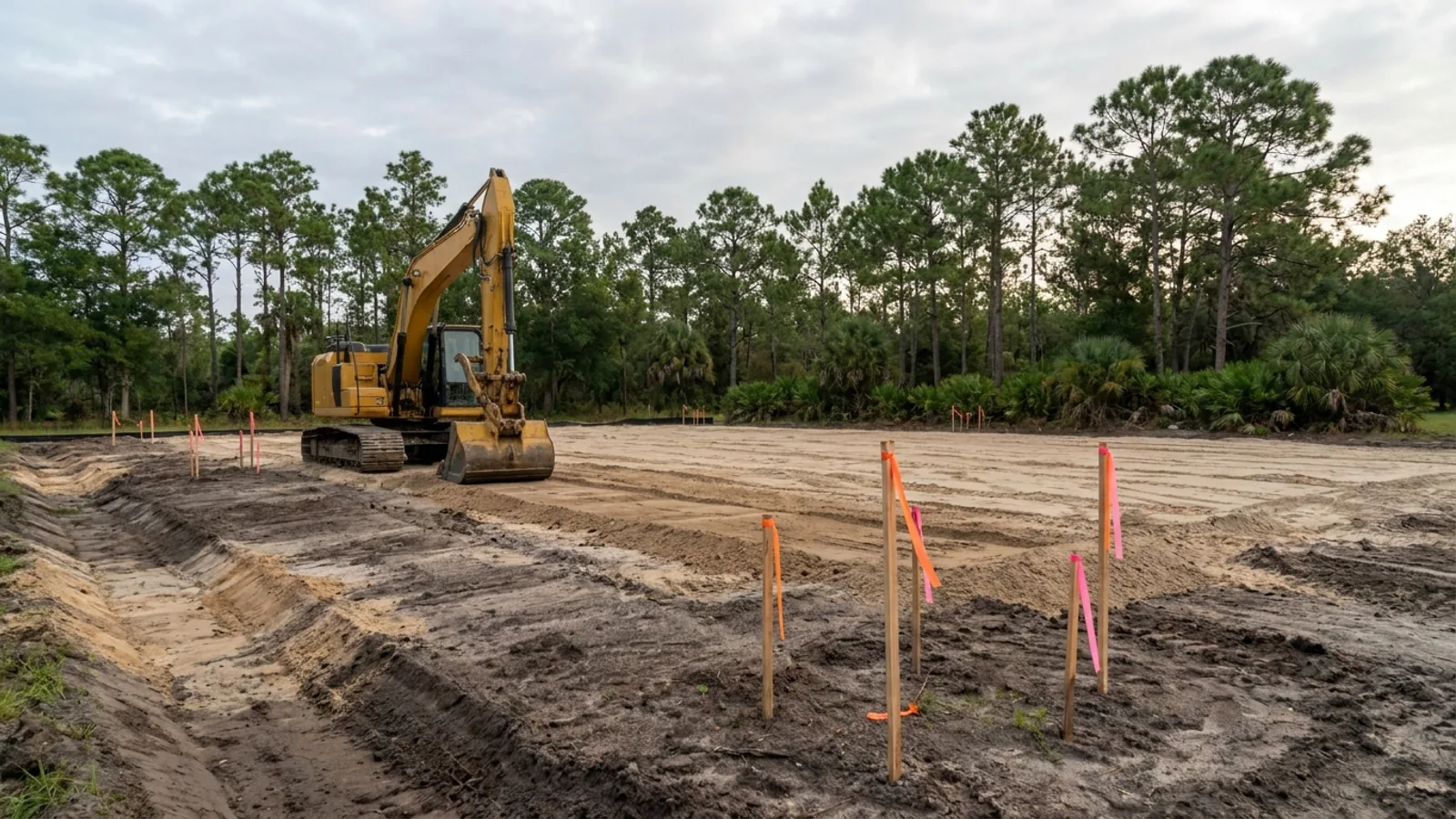
The expensive surprises are in the ground, not the building
Most of Miami-Dade County rates poorly for dwellings in the soil survey, and the reason is water sitting close to the surface rather than weak ground. That makes the pad elevation and the drainage plan the two line items most likely to move your budget. We price the dirt before we price the building.
What we build in Miami Gardens
Every service we offer is available across Miami-Dade County, from a shell kit you erect yourself to a finished home we hand you the keys to. What a build costs depends far more on the parcel than on square footage, so we price against your land rather than publishing a rate card.
See all nine servicesWhat a build looks like
Three stages every Miami Gardens project passes through, from a raw parcel to a finished home. Site work first, because that is where the budget is decided.
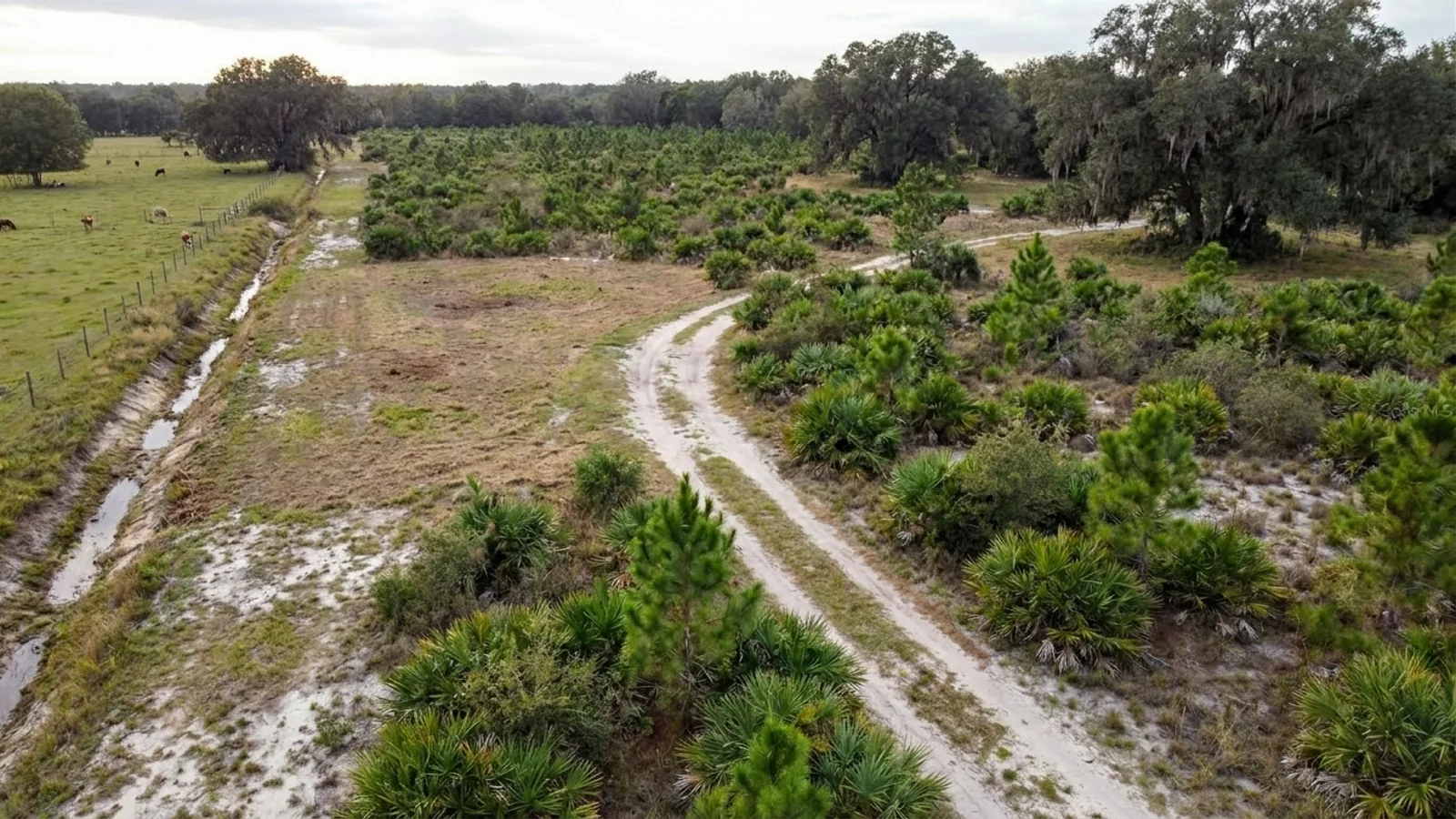
The parcel
Zoning, setbacks, flood zone and utility access get checked before anything is drawn.
Pad and permit
Clearing, grading and a compacted pad, while the submittal works through Miami-Dade County.
Frame to finish
Shell erected and dried in, then systems, insulation and interior finish through to CO.
Those are the rules for Miami-Dade County. Tell us what you want to build and we will draw it to them.
Where we build around Miami Gardens
Miami-Dade County and the rural land around it. The buildable acreage for a project this size usually sits outside the city limits, which is frequently what changes who issues your permit.
Keep reading
The questions that usually come next once you know what Miami Gardens allows.
Is It Legal in Florida?
Classification, zoning, and what the High Velocity Hurricane Zone actually requires in Miami-Dade County.
Read itBarndominium Cost Guide
Sourced ranges by tier, plus the Florida adders that land on top of a national average.
Read itHow Long Does It Take?
Census build-duration data, and the Florida statute capping permit review at 30 business days.
Read itSources for this page
The primary documents behind the Miami Gardens figures above. We would rather you checked them than took our word for it.
- Miami-Dade County Code of OrdinancesZoning districts, minimum lot sizes, setbacks and height limits, as adopted.library.municode.com
- Miami-Dade County Building DepartmentThe authority that reviews and issues the permit for unincorporated parcels.miamidade.gov
- Florida Statute 553.792The 30-business-day permit review clock, and the 10% fee reduction per day a jurisdiction runs late.flsenate.gov
- Florida Building CodeThe adopted code itself, including the wind-speed figures and the High Velocity Hurricane Zone definition.floridabuilding.org
- ASCE 7 Hazard ToolLook up the ultimate design wind speed at a specific address rather than reading it off a contour map.asce7hazardtool.online
Nearby areas we build in
Close to Miami Gardens, though the permitting authority and wind requirements can differ once you cross a county line.
Building in Miami Gardens: common questions
11 questions we get asked most often about building in Miami Gardens. If yours is not on the list, ask it directly.
Can I build a barndominium on acreage in Miami Gardens?
What's this new ADU ordinance I keep hearing about?
What wind speed does my building have to be engineered to?
Is Miami Gardens in the High Velocity Hurricane Zone, and what does that mean for a metal building?
Will a stock metal building kit from out of state work here?
Who issues my building permit, the city or the county?
What are the impact fees for a new single-family home in Miami Gardens?
What are the actual permit fees, beyond the impact fees?
What's the flood insurance situation in Miami Gardens?
Is there a discount for using a private provider instead of city plan review?
Is a Miami Gardens lot big enough for the kind of build people picture with 'barndominium'?
Building in Miami Gardens?
Start with the plan. Tell us what you want to build and we will draw it, then confirm what Miami-Dade County will actually let you put on the parcel and what wind load it has to meet. That conversation costs nothing.