Site Preparation in Florida
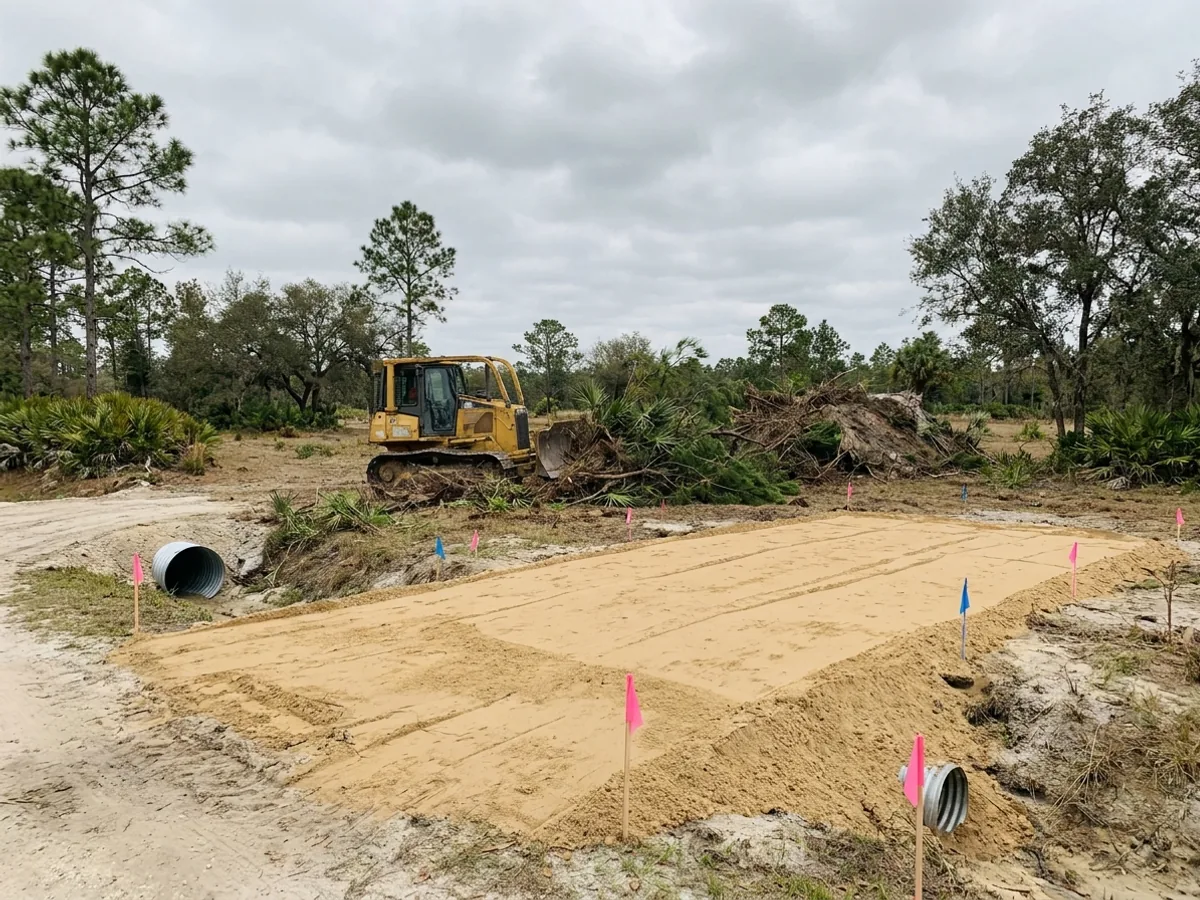
Everything expensive that goes wrong on a barndominium goes wrong below the slab. Site prep is clearing, grubbing, cut and fill, compacted pad, drainage, culvert and driveway, and getting power, water, and septic to the building. In Florida it is also where flood elevation and water table get resolved.
How a site preparation project runs
Four stages, in this order. The sequence matters more than it looks: getting engineering and permitting settled before anything is fabricated is what keeps a build from stalling.
Survey and soil
Boundary and topographic survey plus a soils report. In Central Florida the soils report is also your first read on sinkhole and water table risk.
Clearing and grubbing
Vegetation and stumps out, with tree protection observed where the county requires it. Cleared material is hauled or mulched on site.
Pad and compaction
Cut and fill to design elevation, then a compacted pad tested to spec. If the parcel is in a flood zone the pad elevation is set by the flood requirement, not by preference.
Drainage and utilities
Swales and culverts so water leaves the building, then power, water or well, and septic or sewer stubbed to the pad.
The expensive surprises are in the ground, not the building
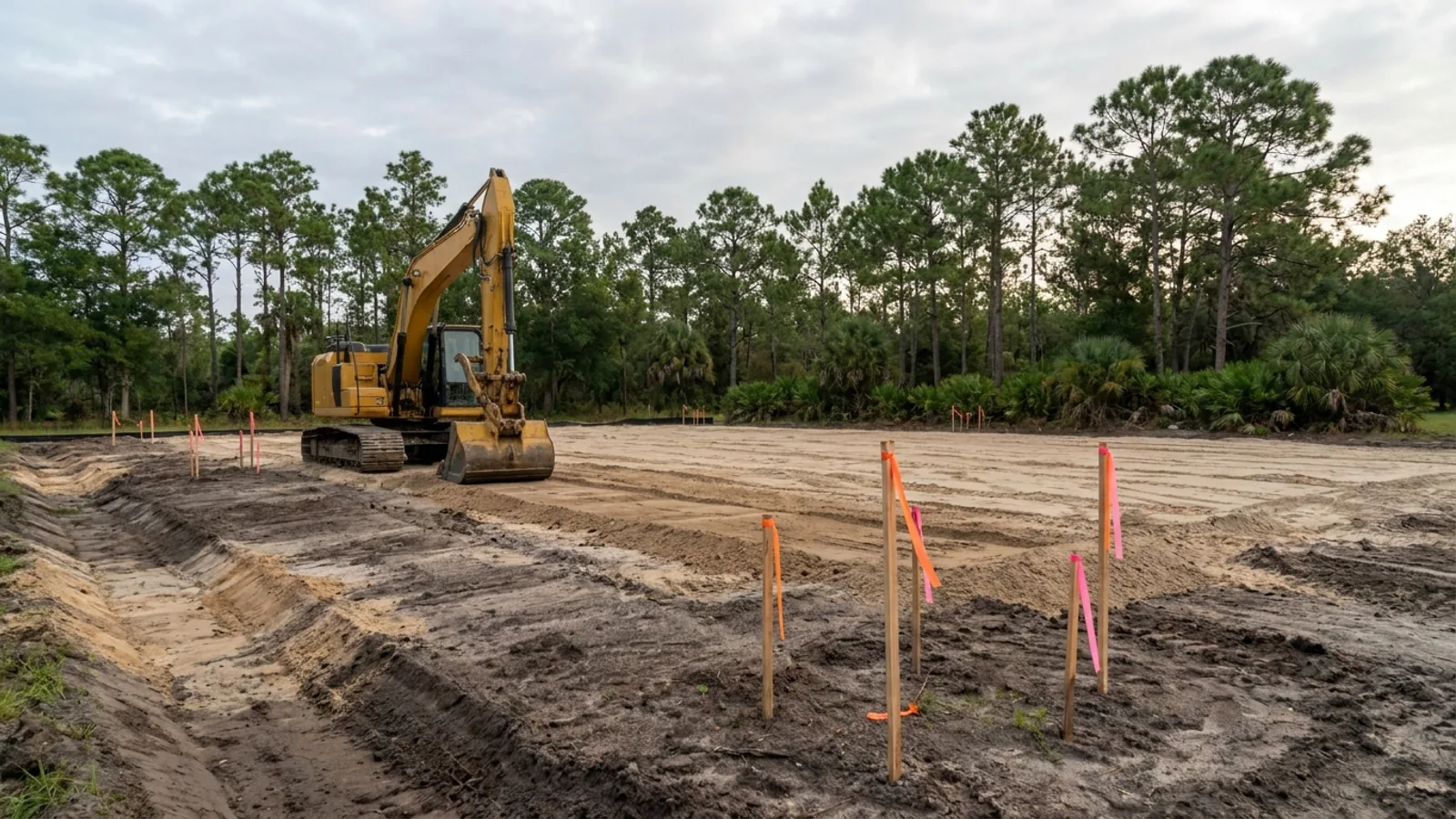
Most of Central Florida rates poorly for dwellings in the USDA soil survey, and the reason is water sitting close to the surface rather than weak ground. That makes pad elevation and drainage the two line items most likely to move a budget after contract. It is also why we price the dirt before we price the building.
Serving clients across the entire region. View our full service area →
What actually decides the price
Square footage is the number everyone leads with, and it is rarely the one that moves a barndominium budget. These four do.
-
How much has to come off
Clearing and grubbing scale with tree density and stump size, and some counties require tree protection or replacement that constrains what you can remove.
-
Fill volume
Raising a pad to a flood or drainage elevation is measured in truckloads. This single item routinely surprises people more than any other on the project.
-
Drainage and permits
Swales, culverts and the driveway connection, plus any water management district approval. Getting water off the pad is not optional in this climate.
-
Utility distances
How far power has to run, whether you are on well and septic, and what the soil percolation allows. On acreage these runs add up quickly.
Site Preparation in Florida: common questions
5 questions we get asked most often about building in Florida. If yours is not on the list, ask it directly.
How much fill will my lot need?
Do I really need a survey and a soils report?
What if my parcel is in a flood zone?
Septic or sewer, and who decides?
Do I need a permit just for the driveway?
Keep reading
The pages that answer the next question this one raises.
Ready to put site preparation against a real plan? Start there and the rest follows.
Tell us about the land
Send the parcel ID or an address and we will come back with what can be built on it, the wind load it has to meet, and a realistic budget range. That conversation costs nothing.