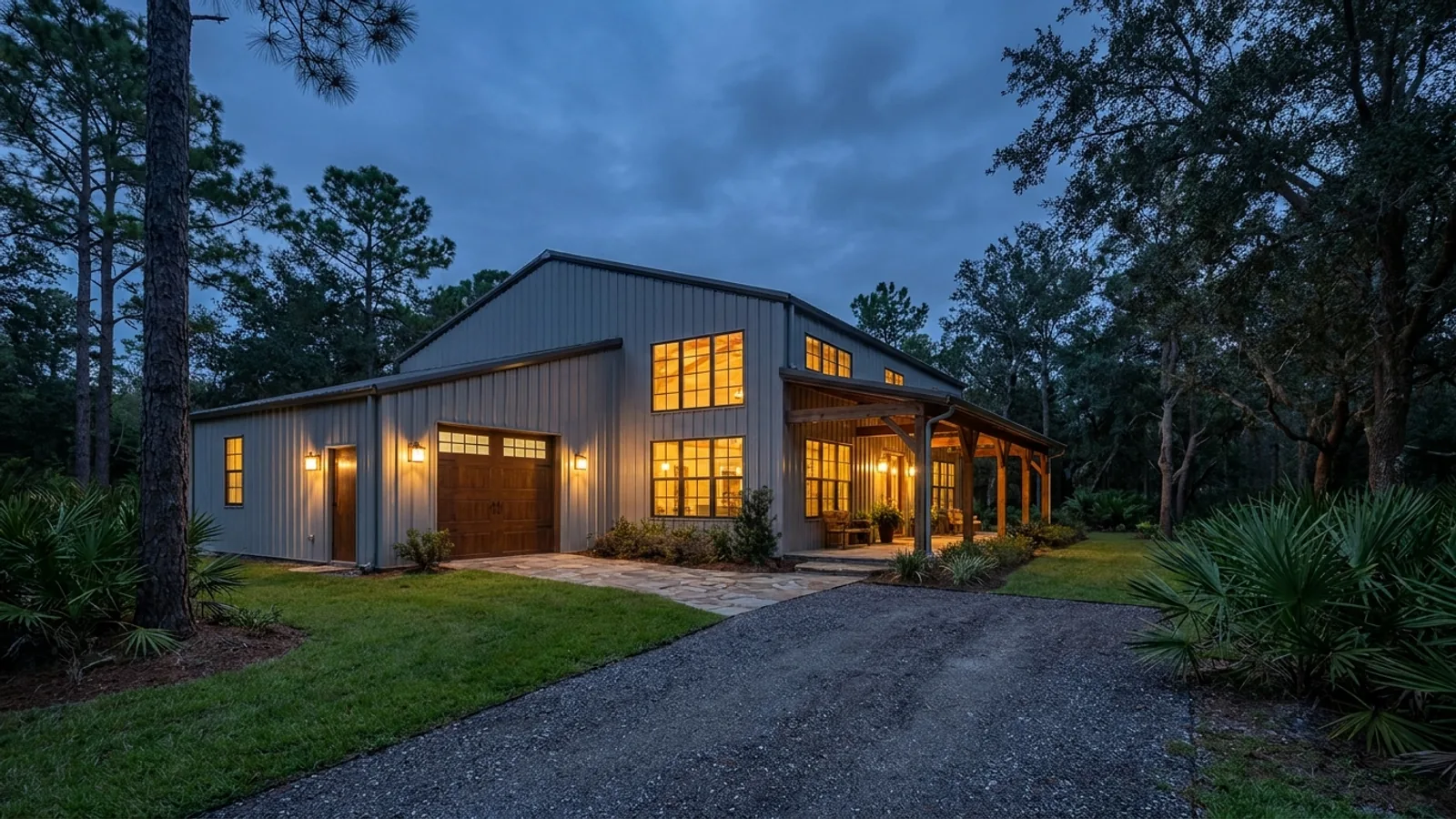
Barndominium Builders in Gainesville, FL
Alachua County is the only place we build that publishes its own barndominium plans-review checklist, which tells you how routine these have become here. It also carries among the lowest design wind speeds in Florida and sits entirely outside the wind-borne debris region, so no impact glazing is required. The trade-off is a genuinely stricter environmental regime: this is karst country, and the county regulates wetlands the state would let through.
Building conditions in Gainesville
What actually changes from one Florida city to the next: who issues the permit, what wind speed the structure has to be engineered to, and what the ground is like. These are the numbers your drawings have to satisfy.
Alachua County Growth Management, Minimum Barndominium Plans Review Requirements, revised 4 June 2024. Most Florida counties publish nothing of the kind.
FBC 8th Edition (2023) Figure 1609.3(1). The county code sheet still posted online cites the 2017 edition and is stale, so confirm the adopted value with the Building Official.
Alachua County building code sheet, confirmed against the adopted FBC 2023 wind-borne debris map. Also outside the HVHZ.
Alachua County Unified Land Development Code section 407. This is exactly what the county barndominium checklist contemplates: one building, R-3 use, Risk Category II.
Our arithmetic from the two published fee schedules. County also cuts plan review and inspection fees to 25% of normal if you use a private provider, which is unusually generous.
Alachua County ULDC Chapter 406 Article 16. New development on well and septic also needs a one acre minimum lot, three acres inside the Idylwild/Serenola study area.
Also worth knowing before you build in Gainesville
- The county regulates wetlands the state does not
- Its code applies to all surface waters and wetlands regardless of size and is expressly not limited to those shown on maps. A small isolated wetland the state would wave through can be county-jurisdictional here.
- Zoning, agricultural district
- Three acre minimum lot at one dwelling per five acres, 20% maximum site coverage, 40 ft front and rear setbacks. Building height is unlimited except for residential structures, which are capped at 35 ft.
- No minimum house size
- Nothing in the county code sets a minimum living area for a single-family dwelling. A compact build that would fail the floor in several coastal cities is fine here.
- Metal buildings are not restricted
- No county-wide restriction on metal cladding for a dwelling. Exterior material standards exist only inside specific urban activity centres, not on agricultural land.
- Hurricane exposure, measured
- Across Irma, Idalia and Hermine the highest wind ever measured at Gainesville Regional was a 58 mph gust, and that was Irma passing about 20 miles west. The design standard is 120 to 130 mph.
- Rain, not wind, is the inland risk
- Annual rainfall is 47.33 inches, the lowest of any market we build in, but Irma alone delivered 12.40 inches in one storm. Freshwater flooding rather than wind is what drives siting and floor elevation this far inland.
- Ground conditions
- 51% of the county rates Not Limited for dwellings, the best of any market on our list. The main constraint where it exists is a seasonal high water table, affecting around 238,000 acres.
- Clay is a real factor here, unlike the peninsula
- About 28,800 acres carry shrink-swell soils, around Paynes Prairie, Orange Lake, Newnans Lake and Lochloosa. On those parcels a geotechnical report genuinely changes the slab design rather than just confirming it.
- Sinkholes, in proportion
- 81 reported subsidence incidents, ranking Alachua joint 14th of 67 counties and well below the Tampa Bay corridor. Only 2 of the 81 have been verified by a geologist as true sinkholes.
- Where sinkholes actually form
- Western and central Alachua County, where limestone sits under less than 25 feet of sand. They are much less common in the east, where clay runs over 100 feet thick. Risk is mappable rather than county-wide.
- Flood insurance discount
- Unincorporated Alachua County holds a Community Rating System Class 5, worth 25% off flood premiums. Nationally only 37 communities have reached Class 5 or better.
- The market is student housing
- Single-family permits fell 16% to 689 units in 2025 while apartment units nearly tripled to 2,629. Headline permit totals here describe the university, not the detached housing market.
ULDC Chapter 406 Article 6. Buffers run 35 ft to 150 ft depending on size and whether listed species are present.
Alachua County ULDC Table 403.04.1, district A. Outside the Urban Cluster nothing may be built within 75 ft of a section line without a waiver.
Alachua County ULDC, searched in full. Room dimensions come from the state residential code.
Alachua County ULDC. The county also accepts generic sealed manufacturer engineering for pre-engineered metal buildings.
NOAA NHC tropical cyclone reports and NWS Jacksonville. Irma also dropped 12.40 inches of rain here, which is the real inland hazard.
NOAA NCEI 1991-2020 Climate Normals, Gainesville Regional Airport.
USDA NRCS soil survey FL001, our aggregation.
USDA NRCS FL001. Series flagged: Shenks, Ledwith, Bivans, Wauberg, Emeralda, Micanopy. Central Florida sand does not behave this way.
Florida Geological Survey subsidence incident reports. Reporting is voluntary and 77 of the 81 were never field-checked.
Alachua County Environmental Protection Department sinkhole fact sheet.
Alachua County Public Works. The county earns it precisely because its floodplain regulation exceeds federal minimums.
US Census Building Permits Survey, Alachua County annual files.
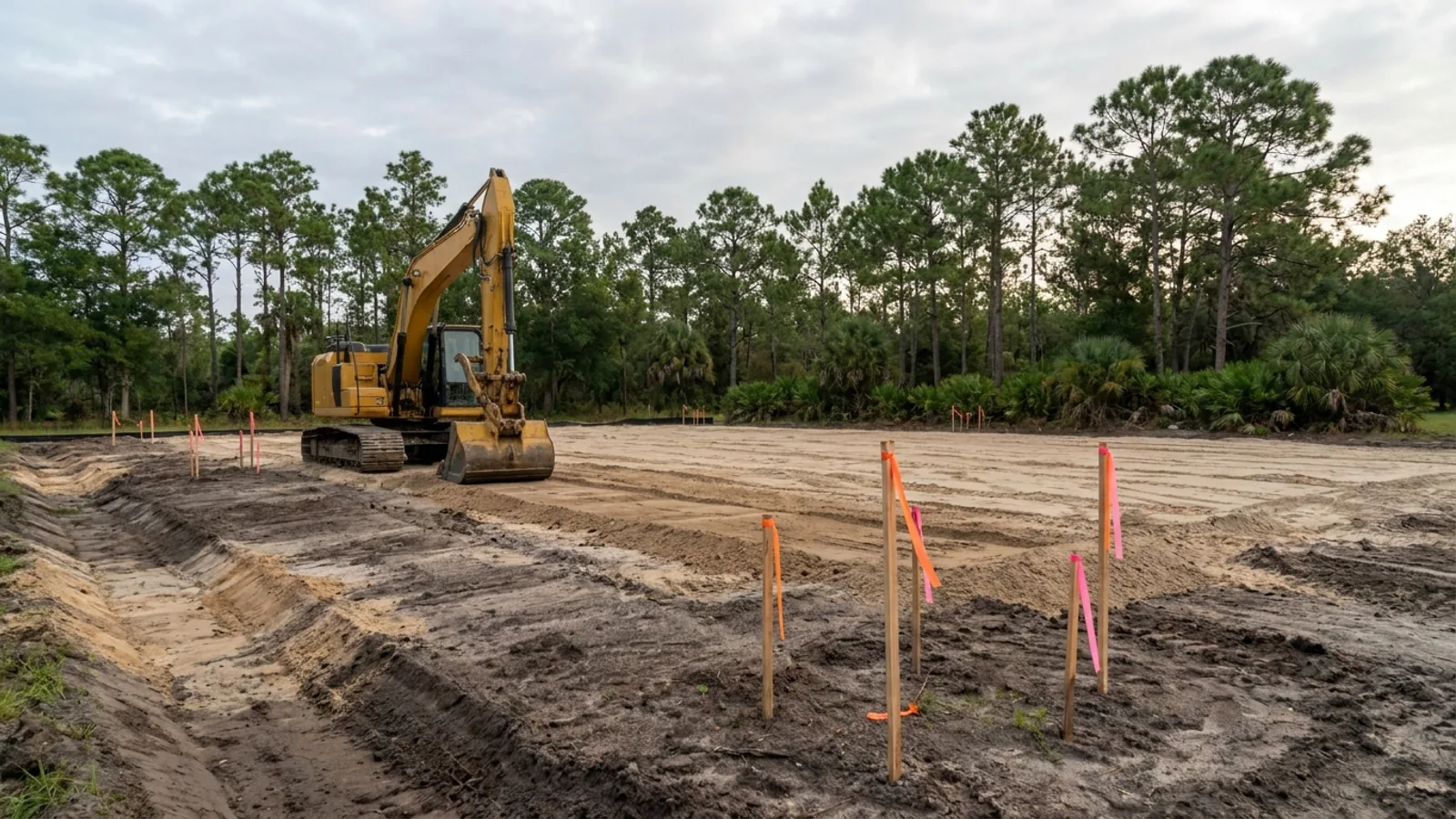
The expensive surprises are in the ground, not the building
Most of Alachua County rates poorly for dwellings in the soil survey, and the reason is water sitting close to the surface rather than weak ground. That makes the pad elevation and the drainage plan the two line items most likely to move your budget. We price the dirt before we price the building.
What we build in Gainesville
Every service we offer is available across Alachua County, from a shell kit you erect yourself to a finished home we hand you the keys to. What a build costs depends far more on the parcel than on square footage, so we price against your land rather than publishing a rate card.
See all nine servicesWhat a build looks like
Three stages every Gainesville project passes through, from a raw parcel to a finished home. Site work first, because that is where the budget is decided.
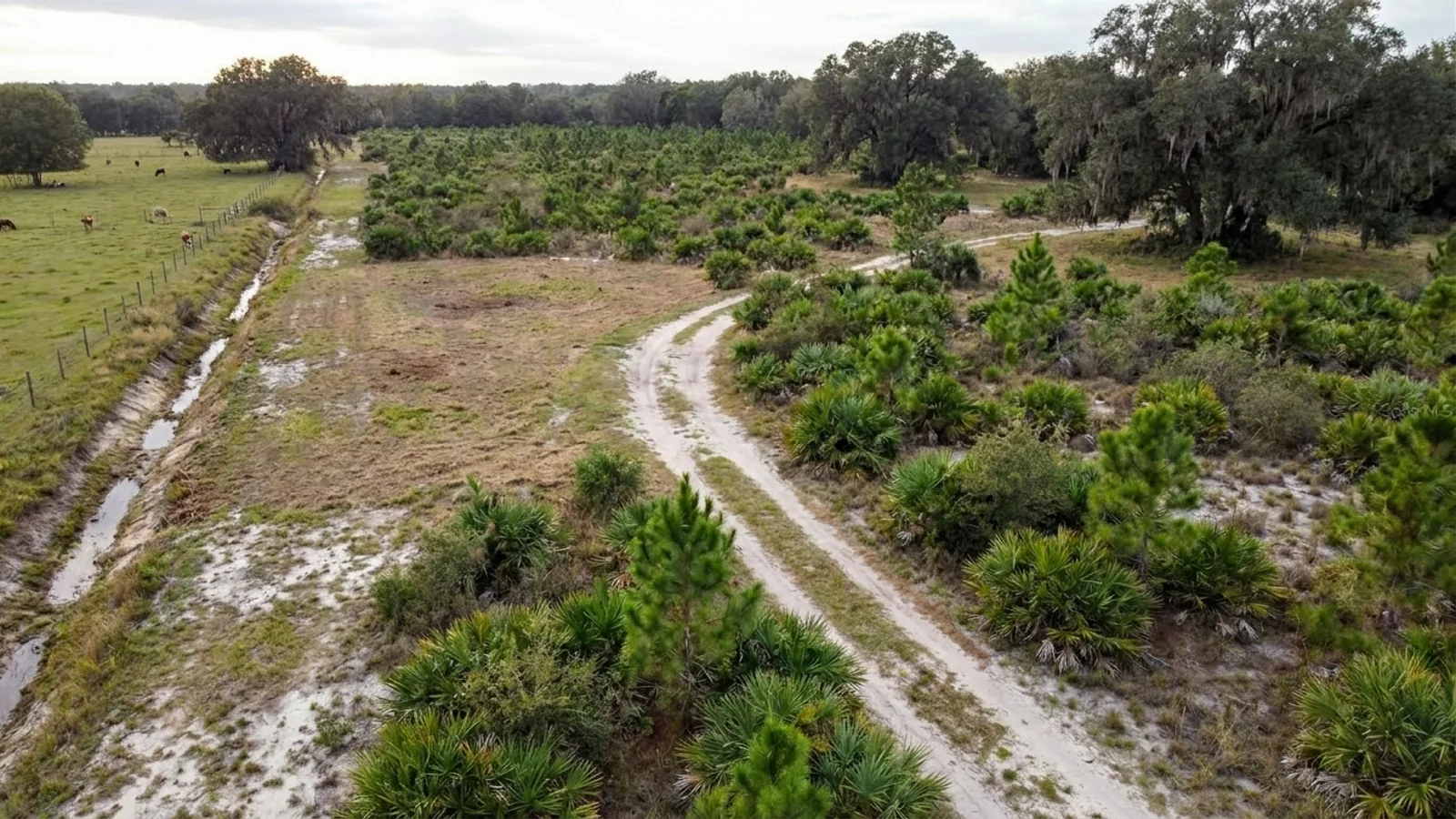
The parcel
Zoning, setbacks, flood zone and utility access get checked before anything is drawn.
Pad and permit
Clearing, grading and a compacted pad, while the submittal works through Alachua County.
Frame to finish
Shell erected and dried in, then systems, insulation and interior finish through to CO.
Those are the rules for Alachua County. Tell us what you want to build and we will draw it to them.
Where we build around Gainesville
Alachua County and the rural land around it. The buildable acreage for a project this size usually sits outside the city limits, which is frequently what changes who issues your permit.
Keep reading
The questions that usually come next once you know what Gainesville allows.
Barndominium Cost Guide
Sourced per-square-foot ranges by tier and by size, with a calculator built on the same figures.
Read itIs It Legal in Florida?
Classification, zoning, the HOA gate, and the agricultural exemption that does not cover a home.
Read itHow Long Does It Take?
Census build-duration data, and the Florida statute capping permit review at 30 business days.
Read itSources for this page
The primary documents behind the Gainesville figures above. We would rather you checked them than took our word for it.
- Alachua County Code of OrdinancesZoning districts, minimum lot sizes, setbacks and height limits, as adopted.library.municode.com
- Alachua County Building DepartmentThe authority that reviews and issues the permit for unincorporated parcels.growth-management.alachuacounty.us
- Florida Statute 553.792The 30-business-day permit review clock, and the 10% fee reduction per day a jurisdiction runs late.flsenate.gov
- Florida Building CodeThe adopted code itself, including the wind-speed figures and the High Velocity Hurricane Zone definition.floridabuilding.org
- ASCE 7 Hazard ToolLook up the ultimate design wind speed at a specific address rather than reading it off a contour map.asce7hazardtool.online
Nearby areas we build in
Close to Gainesville, though the permitting authority and wind requirements can differ once you cross a county line.
Building in Gainesville: common questions
8 questions we get asked most often about building in Gainesville. If yours is not on the list, ask it directly.
Is Alachua County actually used to barndominiums?
Do I need impact windows in Gainesville?
Can I put the shop up first and finish the house later?
Is the county harder to deal with than its neighbours?
How worried should I be about sinkholes?
How much land do I need in Alachua County?
What is the ground like around Gainesville?
What is the real hurricane risk this far inland?
Building in Gainesville?
Start with the plan. Tell us what you want to build and we will draw it, then confirm what Alachua County will actually let you put on the parcel and what wind load it has to meet. That conversation costs nothing.